Author: Paul Austin-Menear

  • How to Know When to Open Your Chequebook

    How to Know When to Open Your Chequebook

    Bootstrapping can be great for your vanity financial metrics, but the leather wears out a heck of a lot faster.

    If you’re an entrepreneur who’s ever debated whether to pay for something or “just do it yourself,” this article is for you. It’s not just about money—it’s about understanding when spending becomes an investment rather than an expense.

    When you’re building something from the ground up, money feels scarce, especially if you’re bootstrapping. You start treating your bank account like an endangered species—hoarding every cent, afraid to spend in case tomorrow’s invoice doesn’t get paid. Frugality is useful, but when it crosses the line into fear, it can quietly sabotage your growth.

    The core of this discussion isn’t just about budgets. It’s about opportunity cost—the invisible price tag on your time and energy. You might “save” a thousand dollars by doing a task yourself, but if that task consumes twenty hours you could’ve used generating five thousand in revenue, you’ve actually lost ground.

    The framework presented here offers a structured way to think about when to buy and when to DIY. Treat your time like an investment portfolio. Weigh both the tangible (cash) and intangible (time, learning, risk) costs to decide which option creates more leverage and long-term value.

    Use the accompanying spreadsheet to assess each decision based on hours required, cost, opportunity value, learning potential, error risk, repeat value, and strategic leverage. The lower the total cost and the more “green” boxes you see, the smarter the choice.

    Some problems are worth outsourcing—legal, bookkeeping, or technical work that’s high leverage but non-core. Others are best kept in-house when they build repeatable knowledge, enhance differentiation, or strengthen your system over time.

    And then there’s the paradox of control. Founders often cling to doing everything themselves out of a desire for control, mistaking it for competence. But as your company grows, control and impact start working against each other. The more you hold onto, the less room there is for your business to expand.

    The mark of a maturing entrepreneur is knowing when to deploy resources, not hoard them. Spend when it accelerates your mission; save when it strengthens your foundation.

    Momentum’s contagious. Share this with someone who’s building, too.

    Read the full post or listen to the podcast edition here : https://6catalysts.substack.com/p/how-to-know-when-to-open-your-chequebook

  • The Journey : In Conversation with Benjamin Lappalainen

    The Journey : In Conversation with Benjamin Lappalainen

    In this episode of The Journey : In Conversation, Paul Austin-Menear sits down with Benjamin Lappalainen—creative technologist, educator, artist, and XR development lead at UKAI Projects—for a wide-ranging conversation about freelancing, AI, and culture.

    Benjamin traces his path from studying aerospace engineering at the University of Toronto to pivoting into technology, product management, and ultimately a creative freelance career. Along the way, he reflects on lessons learned at Nanoleaf, where he developed screen mirroring technology, and how those experiences sharpened his ability to explain complex technical ideas in clear, accessible ways.

    One of the central themes in this episode is education. Benjamin emphasizes the importance of raising technical literacy, particularly around emerging technologies like AI. He explains how small language models can be run locally, why that matters for individual agency, and how too much reliance on cloud-based services risks eroding user control. Together, Paul and Ben explore how anthropomorphizing AI chatbots shapes human interaction, how corporate pressures may push AI toward embedded advertising, and what that means for trust.

    The conversation shifts to UKAI Projects, a cultural R&D collective experimenting with new ways of linking technology and society. Benjamin shares highlights from a recent residency in Taiwan and UKAI’s “reverse RFP” experiment—an initiative flipping the traditional request-for-proposal model to embed artists inside companies as creative problem solvers.

    The episode closes with practical advice for freelancers. Benjamin stresses the importance of financial runway, building networks, and being ready to wear many hats. Paul underscores that freelancing rarely means an immediate income replacement, but small steps and side projects can ease the transition. Together, they offer a balanced, realistic perspective for anyone contemplating independent work.

    Whether you are an entrepreneur, artist, technologist, or someone exploring new ways of working, this episode offers both inspiration and grounded lessons.

    Read the full post or listen to the podcast edition here : https://6catalysts.substack.com/p/in-conversation-with-benjamin-lappalainen

  • Selling Serenity : Convincing Investors to Believe in Forest Bathing

    Selling Serenity : Convincing Investors to Believe in Forest Bathing

    In this month’s AMA, Hana in Kyoto writes in about her wellness startup blending traditional Japanese forest bathing (Shinrin-yoku) with virtual reality for overworked office workers. Her question? How to convince investors that a seemingly niche concept has real commercial potential.

    It’s a fair challenge. Novel ideas often generate early buzz among users but confusion among funders. Investors like clarity—and they want to see how passion translates into profit.

    To start, Hana’s idea stands out precisely because it’s unusual. There’s strength in differentiation; the world doesn’t need another copycat business. What it does need is a bridge between innovation and credibility. When investors encounter something new, they look for one of three things: belief in the money, belief in the mission, or belief in the founder. Understanding which type of investor you’re talking to will help you tailor your story to their motivations.

    Hana’s first move should be to clarify her long-term vision. Is she building a mass-market wellness brand powered by technology? A boutique therapeutic experience delivered through select partners? Or a replicable franchise model that blends physical and virtual serenity? Each version determines not only her growth plan but the kind of capital she should pursue.

    It’s also worth remembering that not every startup needs outside investors immediately. Chasing equity when pre-revenue can mean giving up too much ownership, too early. Exploring non-dilutive options—grants, low-interest loans, competitions, or strategic sponsorships—can preserve both control and flexibility.

    Investors love traction. A polished demo, pilot event, or proof of customer demand can tip the scales in your favour. That might mean organizing a guided forest bathing retreat and collecting testimonials, or showcasing the technology at a wellness expo. Tangible validation builds confidence that your vision can scale.

    For Hana, and any builder reading this, the goal isn’t just to convince investors—it’s to align your story with the kind of belief that matches your mission. Whether that belief lives in numbers, strategy, or you, make sure it’s real.

    Momentum’s contagious. Share this with someone who’s building too.

    Read the full post or listen to the podcast edition here : https://6catalysts.substack.com/p/ama-selling-serenity-convincing-investors

  • [Medium] Measuring the Flames : Marketing Analytics for Builders (Part 2)

    [Medium] Measuring the Flames : Marketing Analytics for Builders (Part 2)

    If you’ve ever opened Google Analytics and felt your pulse quicken, you’re not alone. Today’s marketing tools give us more data than ever — but also more confusion. The problem isn’t a lack of information. It’s that most builders haven’t been taught how to interpret what they see.

    Marketing analytics, when done right, aren’t about collecting every possible data point. They’re about focusing on the ones that directly connect to business outcomes. Builders who learn to measure what matters transform analytics from noise into navigation.

    At its heart, marketing analytics is about alignment. Every business has its unique mix of activities — ads, email campaigns, product launches, community engagement — and each should serve a purpose. When you tie your metrics to your marketing mix (the Five Ps) and your funnel or flywheel model, you stop reacting to numbers and start directing them.

    The funnel represents Awareness, Consideration, and Conversion. It’s where prospects move from discovery to decision. The flywheel — Attract, Convert, Retain, Create — recognizes that growth isn’t linear. Loyal customers drive momentum, fuelling new opportunities through advocacy.

    They’re not competing models — they’re complementary lenses. The funnel fits within the flywheel’s Convert stage, giving you both tactical and strategic clarity.

    So, how do you build a measurement program that serves you rather than the other way around?

    1. Start by mapping your funnel and flywheel.
    2. Identify your marketing activities under each stage.
    3. Define how you’ll measure success for each activity.
    4. Collect data for a few months.
    5. Set goals based on your baseline and refine over time.

    When it comes to metrics, simplicity beats sophistication. Start with the essentials : Conversion Rate, Marketing Efficiency Ratio, Cost per Lead, Customer Lifetime Value, and Net Promoter Score. Each reveals something about how effectively your marketing drives awareness, revenue, and loyalty.

    But don’t stop there. Builders are problem-solvers — and sometimes, the metric you need doesn’t exist yet. Create your own. Custom metrics let you measure behaviour that’s specific to your customers and your goals.

    Consider the example of a small coffee chain that noticed customers who ordered a drip coffee and baked good often bought a bag of beans to take home. They created a custom metric — the Combo-to-Bagged-Bean Ratio — to track the relationship between in-store pairings and take-home sales. By quantifying that pattern, they could test promotions, adjust displays, and measure progress toward a 1:1 ratio.

    Measurement is a feedback loop. The more clearly you define what you’re measuring, the better you can improve it.

    In the end, analytics isn’t about being data-driven — it’s about being decision-driven. Builders who know what they’re measuring, and why, make smarter moves faster.

  • The Flywheel and the Funnel, a Marketing Fable

    The Flywheel and the Funnel, a Marketing Fable

    Are these models of marketing as mutually exclusive as we once believed?

    Your model’s crap.

    No, YOUR model’s crap.

    If you both don’t simmer down, I’m going to turn this car around and then BOTH of your models will be crap!

    The moral of the story? Sometimes people talk a lot of crap. Like I am right now. But that little car argument is a perfect metaphor for how people debate models of marketing—the flywheel versus the funnel.

    Let’s rewind.

    Arguing about what’s better, A or B, is as old as the letters themselves. Often we’re so dug in on defending our side that we forget multiple truths can exist at once. Mutual exclusivity isn’t the law of marketing physics—it’s just a habit we picked up along the way.

    Once upon a time, I overheard two young marketing students in a cafeteria arguing about which model was better. One swore by the flywheel for its repeatability. The other insisted on the funnel for its focus. Both were right.

    Because here’s the thing: these models aren’t rivals. They’re teammates. The funnel gives direction. The flywheel gives momentum. Together, they make growth sustainable.

    The Funnel : Focus and Flow

    A funnel is a visual map of the customer journey—from awareness to consideration to conversion. Its purpose is to focus energy on guiding people toward a specific, high-value outcome (usually revenue).

    The weakness? When the funnel ends, so does the momentum. Once the campaign finishes or the cohort converts, the inertia leaks out.

    The Flywheel: Retention and Repeatability

    The flywheel model works differently. It runs perpetually—as long as effort keeps it spinning. Its genius lies in reusing momentum from previous activity. Once customers are inside your orbit, the cost of re-engaging them drops dramatically.

    It follows four simple stages : Attract, Convert, Retain, and Create.

    • Attract : Bring people into your orbit.
    • Convert : Persuade them to take action.
    • Retain : Keep their attention and trust over time.
    • Create : Turn loyal customers into advocates.

    The flywheel ensures every marketing activity reinforces the last. Its weakness, however, is altitude—it can miss the on-the-ground details that make sales work.

    The Hybrid : Making It a “Funwheel”

    The solution? Combine the two. Use the funnel for precision and the flywheel for persistence. Each stage of the flywheel contains micro-funnels guiding your audience from attention to action.

    As you refine your systems and messaging, inertia builds—and the whole mechanism becomes easier to sustain.

    In Practice : The Coffee Shop Example

    Imagine you own a small café in a tourist town. You attract visitors through local ads, cross-promotions, and charming social media posts. Inside, clean spaces, friendly staff, and clever signage convert curiosity into sales.

    Then you retain attention with a loyalty club, discounts, and personal touches. Over time, your biggest fans bring friends, expanding your customer base through advocacy.

    That’s the flywheel and funnel working together—sales today, momentum tomorrow.

    The Big Lesson

    Doing what others don’t is a powerful differentiator. While big corporations rely on their size, your edge lies in agility, authenticity, and connection. You don’t need to conquer the market—you just need to capture enough of it to thrive.

    And the best part? Once your systems align, every turn of the wheel multiplies the force behind your business.

    Read the full post or listen to the podcast edition here : https://6catalysts.substack.com/p/marketing-the-flywheel-and-the-funnel

  • Measuring the Flames : Marketing Analytics for Builders (Part 2)

    Measuring the Flames : Marketing Analytics for Builders (Part 2)

    Tracking what truly matters is an under-loved, yet critical part of building something lasting.

    When it comes to marketing analytics, the line between insight and overload is razor-thin. Data is abundant, but understanding which numbers actually matter—and how to interpret them—takes experience, clarity, and discipline. In this second installment of Measuring the Flames, we dive into the tangible mechanics of marketing analytics for builders, founders, and marketers who want to move from guesswork to growth.

    The post begins by addressing a common struggle : too much data and too little focus. Tools like Google Analytics can present hundreds of possible metrics, but without a framework, it’s easy to drown in the noise. The key lies in connecting metrics to outcomes. Align your measurements with your marketing mix (the Five Ps) and either your funnel or flywheel model to identify what truly influences growth.

    Paul explains three broad groups of metrics that anchor any effective measurement system :

    1. Outcome Metrics—financial health indicators such as revenue and cost.
    2. Intermediate Metrics—signals that move the needle, like conversions or leads.
    3. Origination Metrics—inputs like impressions or foot traffic that fuel your funnel.

    From there, he outlines how each stage of the funnel (Awareness, Consideration, Conversion) and flywheel (Attract, Convert, Retain, Create) can be measured and optimized. The two models, often treated as rivals, are shown instead as complementary—each illuminating a different phase of customer interaction.

    The article then moves into the heart of the craft : designing your own measurement program. Start small, document your funnel stages, list key activities, define how to measure each, and begin experimenting. After establishing a baseline, use your data to set goals and refine performance.

    You’ll also find explanations of key marketing metrics—Conversion Rate, Cost per Lead, Customer Lifetime Value, Marketing Efficiency Ratio, Net Promoter Score, and more—each paired with plain-language formulas and reasons why they matter.

    Finally, Paul closes with a crucial lesson: not every useful metric already exists. Builders should feel empowered to invent their own, tailored to their goals and customer behaviour. The example of a fictional coffee chain demonstrates how custom metrics can uncover powerful insights into product pairings and customer behaviour.

    The Journey continues its mission to be the builder’s field manual—practical, hands-on, and rooted in experience. Read the full post or listen to the podcast edition here : https://6catalysts.substack.com/p/measmeasuring-the-flames-marketing-analytics-p2

  • [Medium] Stoking the Fire With Remarketing

    [Medium] Stoking the Fire With Remarketing

    Stoking the Fire with Remarketing : How to Use it to Win Smarter, Not Louder

    When it comes to digital advertising, the loudest voice doesn’t always win. The most efficient campaigns are often those that know when to speak, to whom, and why. This is where remarketing — sometimes called retargeting — comes into play. It’s not about casting a wider net. It’s about knowing exactly where the fish are and dropping the line at the perfect moment.

    Let’s break it down.

    What is Remarketing?

    If you’ve ever visited a website, clicked around, then left — only to suddenly see that brand’s ads follow you across the internet — you’ve already experienced remarketing.

    Remarketing is the practice of showing ads to people who have already interacted with your brand in some way. This interaction could be a page visit, a form fill, a video view, or even just scrolling through a product page. The idea is simple : remind them you exist and nudge them toward taking a next step.

    But the mechanism isn’t magic. It’s tracking.

    How Does Remarketing Work?

    Digital behaviour is trackable — often to an unsettling degree. Devices, browsers, and platforms leave trails. Cookies, pixels, and login sessions capture and correlate activity across apps and devices.

    When a visitor lands on your website or app, a cookie (a small file) is placed in their browser. Think of it like a little digital paintball — something that stays on the user until it expires, gets deleted, or is overwritten. Now, that cookie can be recognized by advertising networks (like Google, Meta, or Amazon) when the same user visits other websites or platforms within that network.

    This allows advertisers to selectively serve ads to users who have shown interest, regardless of where they are online — reading the news, checking email, or scrolling social media. And if those users are logged in across multiple devices? The tracking — and ad targeting — can follow them across smartphones, tablets, and desktops.

    The Role of Remarketing in the Marketing Mix

    Remarketing falls within the Promotion category of the marketing mix, but it’s more of a highlighter than a headline.

    Used well, it reinforces your message and drives conversion. Used poorly, it drives up your cost-per-acquisition and annoys your audience.

    The key is to layer it into a broader strategy, not rely on it exclusively. Remarketing is ideal for amplifying your best-performing content or following up on warm leads. For example, if a video ad on YouTube is generating strong engagement, you might follow up with remarketing display ads that tell the next chapter of the story.

    Common Pitfalls to Avoid

    Too often, businesses over-rely on remarketing and burn their budgets doing so. Here are common mistakes :

    • Too much frequency : Seeing the same ad 15 times in a day doesn’t convert — it irritates.
    • Poor segmentation : Treating all visitors the same leads to wasted spend. Someone who bounced after 3 seconds should not be treated the same as someone who abandoned their cart.
    • Geographic mismatch : Don’t spend money on countries you don’t serve.
    • Lack of storytelling : Showing the same creative over and over won’t move the needle. Follow up with new angles, new incentives.

    Getting Started: Self-Serve and Agency Models

    If you’re new to remarketing, the easiest way to start is through self-serve ad platforms:

    • Google Ads offers remarketing across Search, Display, and YouTube.
    • Meta Ads (Facebook and Instagram) allows for pixel-based remarketing and custom audience creation.
    • Amazon Ads includes options for sellers and brands with retail footprints.

    Specialized agencies also offer full-serve retargeting solutions, but tread carefully. Not all agencies are created equal. You’re not buying a service — you’re hiring a growth partner. Do your due diligence, check references, and treat it like a major hire.

    Tactical Guidelines for Smarter Remarketing

    To use remarketing wisely, follow these proven strategies :

    • Segment your audiences : Target only those who engaged deeply — product viewers, cart abandoners, or email clickers.
    • Limit impression frequency : Set caps on how often someone sees your ad per day or per week.
    • Use narrative sequencing : Show different ads in a series — introduce, inform, incentivize.
    • Optimize for time of day : If your customers shop at night, don’t waste money advertising in the morning.
    • Align messaging with source behaviour : If someone watched a product video, follow up with a discount on that specific product.
    • Build owned audiences : Push toward email, SMS, or WhatsApp list capture. These channels are far cheaper long term.
    • Model your performance : Use tools like MER (Marketing Efficiency Ratio) to track returns over time. Don’t guess — measure.

    Final Thoughts : Precision Over Volume

    Remarketing isn’t about adding more volume. It’s about applying precision to your existing funnel. It’s your chance to connect again with someone who already knows you — and maybe just needs the right nudge to say yes.

    Used correctly, remarketing extends your brand presence and strengthens your conversion rate. But you have to respect the boundaries of the tactic.

    Don’t just follow your audience around the internet. Offer them a better reason to come back.

  • Measuring the Flames: Marketing Analytics for Builders (Part 1)

    Measuring the Flames: Marketing Analytics for Builders (Part 1)

    When you’re building something new, it’s easy to fall into the trap of making assumptions about your customers and your market. But assumptions only take you so far. The truth is, the businesses that thrive are the ones that learn to measure—carefully, thoughtfully, and consistently. Marketing analytics isn’t just a buzzword; it’s a discipline that transforms scattered data into usable insights that can fuel growth.

    In this post, we dive into the why behind marketing analytics before worrying about the how. That shift in perspective makes all the difference. After all, understanding the tools is much easier once you know why they matter in the first place.

    Consider the story of a Canadian coffee chain trying to carve out a niche in a crowded marketplace. Between national chains, local independents, and the rise of at-home barista machines, it wasn’t enough just to serve great coffee. To stand out, they had to truly understand their customers. By identifying basic behavioural segments—“grab-and-go” commuters rushing in before work, and “sip-and-sit” regulars looking for comfort and community—they were able to tailor experiences and operations. From adjusting service during peak hours to testing pastry samples in the afternoon, these small, insight-driven shifts drove real revenue gains.

    This is the heart of marketing analytics: creating meaningful customer segments. It’s not just about clustering similar people together—it’s about clustering people in a way that you can act on. A “meaningful” segment leads directly to a clear, practical change in marketing or operations that benefits both your business and your customer.

    Getting there doesn’t always mean investing in enterprise-grade tools. Sometimes, your point-of-sale data or a simple Google Sheet can reveal just as much as a pricey analytics platform. What matters is recognizing that any system generating reports can be a source of useful insights—and that integrating data from multiple sources can help you see the bigger picture.

    Marketing analytics may not always feel glamorous, but it creates the conditions for smarter growth. And as competition intensifies, being able to measure what matters and turn those numbers into actionable strategies is what separates sustainable builders from struggling ones.

    In Part 2, we’ll explore the specific types of metrics you can track, how to benchmark performance, and even how to create custom metrics tailored to your unique growth journey.

    Read the full post or listen to the podcast edition here : https://6catalysts.substack.com/p/measuring-the-flames-marketing-analytics

  • [Medium] Feeding the Fire With Paid Advertising

    [Medium] Feeding the Fire With Paid Advertising

    Paid digital ads are convenient — but come at a cost when you over-rely on them

    Paid advertising is one of the most tempting tools available to entrepreneurs. It promises fast growth, measurable results, and scalable reach. But like any powerful tool, it comes with risks. Used carelessly, it can erode profitability and leave your business vulnerable. Used wisely, it can spark growth while helping you build systems that sustain success long after the campaign ends.

    In this article, I’ll unpack the good, the bad, and the downright ugly sides of paid advertising. I’ll also share a practical framework for how to blend ads into your marketing mix in a way that fuels growth without leaving you dependent on a tactic that can easily burn out.

    The Long History of Advertising

    Advertising is as old as commerce itself. Long before capitalism, people were promoting goods and services — whether it was a farmer shouting about fresh produce at a market or a craftsman hanging a sign outside his workshop.

    Modern advertising took shape in the mid-20th century, when print, radio, and eventually television became the dominant channels. Then, in the early 2000s, paid digital advertising emerged. Google’s AdWords (now Google Ads), Amazon’s sponsored listings, and Meta’s ecosystem of Facebook and Instagram ads rewrote the playbook.

    What was once limited to large corporations with big budgets became accessible to anyone with a credit card. Self-serve platforms eliminated many of the intermediaries. Suddenly, the small coffee shop down the street could compete for attention alongside Fortune 500 brands.

    Advertising has always been about attention. But in the digital age, you’re not just competing for attention — you’re renting it. And that’s where the tension begins.

    The Good : Why Paid Advertising Works

    The biggest advantage of paid advertising is obvious: instant access to an audience.

    When you pay for an ad, you’re essentially renting someone else’s distribution. A platform has already done the hard work of gathering users. You plug in your budget, craft your message, and get in front of those eyeballs (or ears).

    This makes paid ads one of the fastest ways to scale. Unlike organic marketing, which requires patience and persistence, ads can deliver immediate results. A new business can go from zero awareness to generating its first sales in a matter of days.

    Paid advertising also comes with built-in support. On the managed end of the spectrum, agencies and media buyers offer creative development and placement services. On the self-serve end, digital platforms provide dashboards, targeting tools, and analytics to empower business owners directly.

    For many businesses, paid ads are the first taste of predictable customer acquisition. When it works, it feels like flipping a switch that floods your funnel with opportunity.

    The Bad : Where the Shine Wears Off

    Here’s the problem… ads aren’t free.

    And while that sounds obvious, the costs are more than just what you pay upfront. Paid ads come with almost no residual value. Once the campaign ends, the impact fades. The sales stop flowing. Unlike content, community, or owned channels, there’s no compounding effect.

    You’re renting attention, not owning it. The moment you stop paying rent, you’re out on the street.

    This creates a treadmill effect. You keep spending to keep results coming in. And if your costs rise — because of higher ad prices, increased competition, or external pressures like tariffs or inflation — your margins get squeezed.

    Another risk is over-reliance. Many businesses fall in love with the quick results of ads and neglect other channels. The Marketing Efficiency Ratio (MER) — a measure of how much you spend to acquire revenue — often balloons over time, eating into profitability.

    Paid advertising will almost always work to some degree. The trouble starts when it stops working as efficiently, and you don’t have other systems in place to pick up the slack.

    The Ugly : Saturation and Attribution

    The word advertisers dread most? Saturation.

    Humans adapt quickly to repeated stimuli. Psychologists call it sensory adaptation. Play music on a long road trip, and over time you’ll unconsciously turn the volume up. Ads work the same way. The more we see them, the more our brains tune them out.

    This is why so many people scroll past banner ads or mentally skip over parts of webpages where ads live. You may still be paying for impressions, but those impressions don’t necessarily equal engagement.

    Attribution adds another layer of complexity. Platforms often count an impression simply because an ad loaded — even if the user never scrolled down far enough to see it. Some platforms have improved, counting only when an ad enters the viewport. But even then, you can’t guarantee someone cognitively registered your message.

    The saturation effect erodes effectiveness. Meanwhile, murky attribution makes it harder to trust the numbers you’re given. This combination is what makes advertising “the ugly” in many marketing budgets.

    A Smarter Way Forward : Paid Ads as a Booster Rocket

    So, should you abandon paid advertising? Absolutely not. The key is to use it strategically — as a booster rocket, not the entire engine.

    Think back to the marketing mix. Paid ads belong in the “Promotion” category. They’re one tactic among many. If they dominate your mix, you’re at risk. If they complement other efforts, you’re stronger.

    The real secret is capturing residual value. Don’t just run ads for the sake of immediate sales. Use them as a bridge to build your own audience. That means collecting email addresses, SMS numbers, or other direct contact information.

    Why? Because once you own the relationship, there’s no middleman charging you rent. You can nurture, educate, and sell to your audience on your own terms.

    Practical Tips for Getting Started

    1. Set up owned channels first.
    2. Add mechanisms to collect email addresses, phone numbers, or signups to your website. A simple newsletter signup form is a great place to start.
    3. Pair ads with incentives.
    4. If someone clicks through from a paid ad, give them a reason to stay connected. Offer a discount, bonus, or piece of exclusive content in exchange for joining your list.
    5. Use frequency capping.
    6. Don’t bombard the same person with endless impressions. Set a limit. If they haven’t engaged after multiple exposures, you’re wasting money.
    7. Run nurturing campaigns.
    8. Use your email or SMS channels to deepen relationships. Share useful content, follow up with relevant offers, and personalize based on customer behaviour.
    9. Measure and rebalance.
    10. Track your Marketing Efficiency Ratio. If it starts climbing too high, rebalance your marketing mix. Ads should fuel your system, not define it.

    The Entrepreneur’s Takeaway

    Paid advertising is a tool, not a silver bullet. Treat it like fire : powerful when contained, destructive when unchecked.

    The businesses that thrive are those that blend paid ads into a broader system. They use ads to accelerate momentum while simultaneously building channels they own. Over time, this reduces dependency, lowers acquisition costs, and creates resilience against competition and market shifts.

    So yes, run ads. But also build systems. Rent attention in the short term, while investing in relationships that last. That’s how you keep feeding the fire without getting burned.


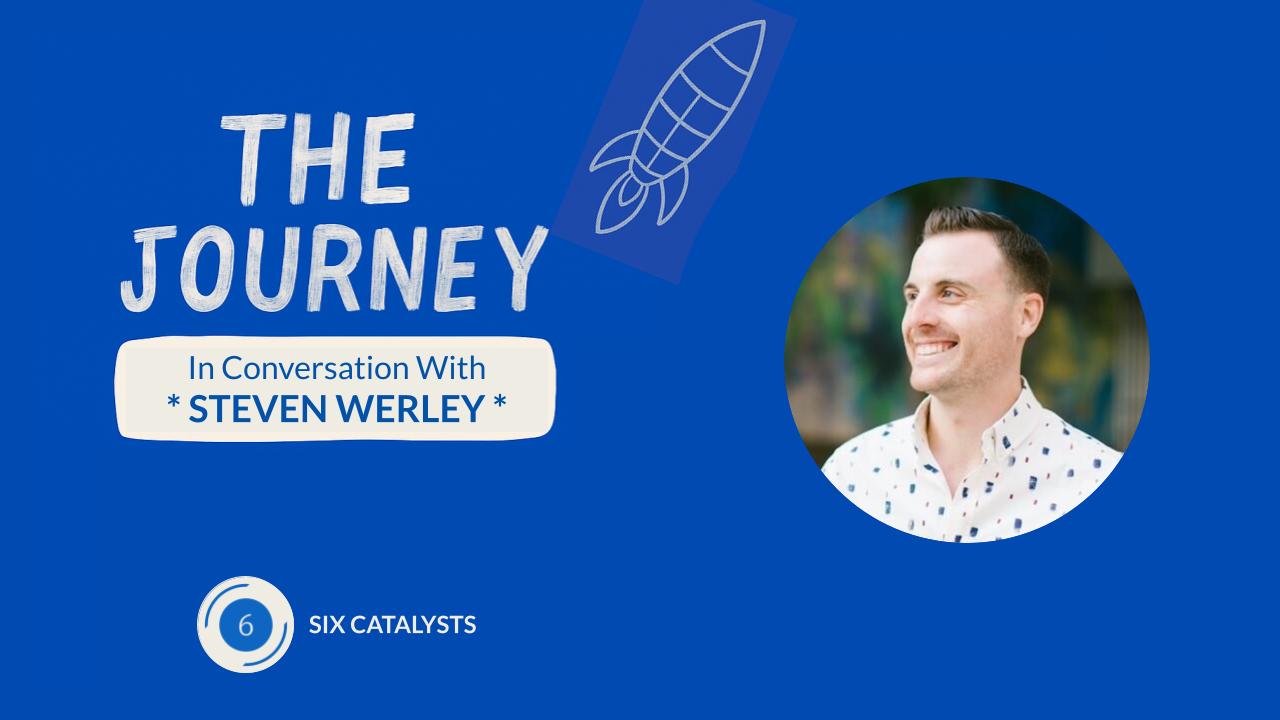
  • The Journey : In Conversation With Steven Werley

    The Journey : In Conversation With Steven Werley

    Entrepreneurship rarely follows a straight line. In this episode of The Journey: In Conversation, I sit down with Steven Werley, founder of Closable.ai, to unpack the winding road that led him from military service to running a marketing agency, to founding a sales agency, and finally into AI-driven sales enablement.

    Steven’s story is one of reinvention. After leaving the military, he experimented with coding, web design, and eventually digital marketing. His early years highlight both the opportunities and the insecurity that come with leaving behind a stable career. From local networking in Pennsylvania and Virginia to building funnels and learning from the likes of Neil Patel and Frank Kern, Steven pieced together the knowledge that helped him grow—but also ran headlong into the chaos and uncertainty that so many founders know all too well.

    One theme that comes up repeatedly is impostor syndrome—the nagging doubt about whether you really know enough to deliver. Steven shares the tools that helped him cope, including the Alter Ego Effect framework and the practice of stoicism. Together, these gave him the ability to step into different roles with confidence and accept the inevitable ups and downs of entrepreneurship.

    We also dive deep into failure. Steven candidly recounts how his sales agency collapsed under the weight of misaligned incentives and client mismanagement, costing him and his partner hundreds of thousands of dollars. Rather than let this end his entrepreneurial journey, he used the experience as fuel to create Closable.ai, a system designed to capture lost revenue, create consistency in sales processes, and act as a force multiplier for sales teams.

    Finally, we explore AI’s role in the workplace. Steven makes the case that AI isn’t about replacing humans—it’s about augmenting them. He stresses that people who learn how to use AI effectively will always have opportunities, even as the job market shifts.

    This is a conversation filled with practical wisdom: about resilience, failure, adaptation, and the importance of documenting your journey. Steven’s advice to his 2016 self? Create content consistently—it will build authority and open doors.

    Read the full post or listen to the podcast edition here : https://6catalysts.substack.com/p/in-conversation-with-steven-werley