


Running your business isn’t the same thing as building your business.
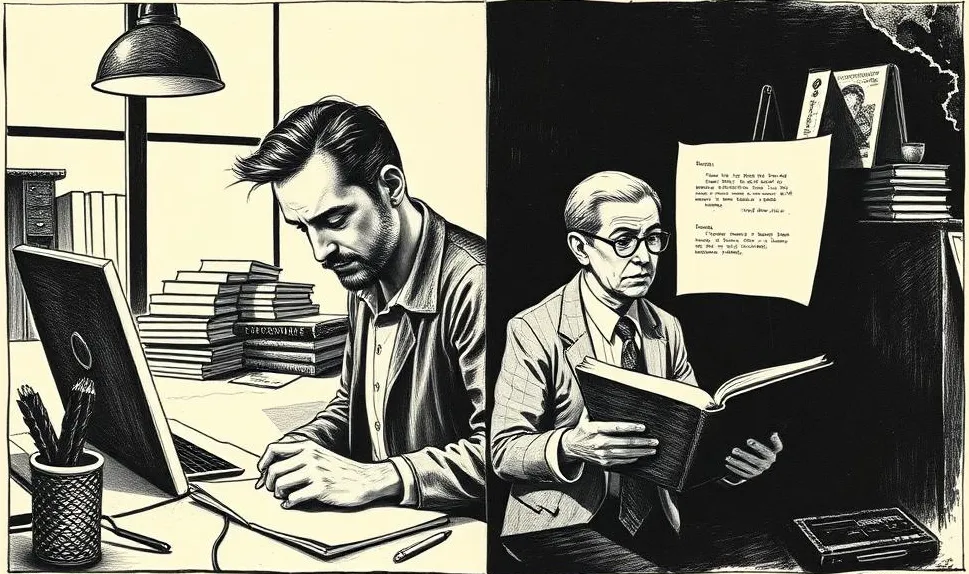
Are You Working In the Business or On It? Here’s Why That Difference Matters More Than You Think
You’re clocking 60+ hours a week. Your calendar is a war zone. You’re juggling operations, firefighting problems, and trying to keep your team motivated.
But here’s the real question :
Is your business actually growing the way you want it to?
If the answer is no, it might be time to revisit a concept you’ve probably heard before :
You need to work on the business, not just in the business.
It’s a mantra passed around in entrepreneurial circles like gospel. But many founders misinterpret it — or ignore it — until they find themselves overwhelmed and off course.
And here’s a nuance that’s rarely discussed : the more you distance yourself from the day-to-day, the more you risk losing touch with the soul of your company. Culture drifts. Vision fades. Momentum stalls.
That’s not just a cautionary tale. It’s a reality for many builders who wake up one day and realize they’ve created something they don’t even recognize.
Let’s unpack what it really means to work in the business versus on the business — and how to strike the balance that growth actually requires.
Working In the Business
When you’re working in the business, you’re embedded in the day-to-day. You’re in the weeds : running operations, solving customer problems, fixing bottlenecks, managing your team, and shipping the product.
This is often called “Founder Mode,” and it’s gained a resurgence of popularity — especially after Paul Graham (of Y Combinator) rebranded it in 2024. Silicon Valley treated it like a revelation. But the truth is, leaders have been operating this way for decades. It’s not new — it’s just been repackaged.
Working in the business isn’t a bad thing. In fact, there’s immense value in being present :
- You build credibility with your team by showing up
- You gain situational awareness that outsiders miss
- You can solve problems quickly and directly
It also aligns with servant-leadership principles — rolling up your sleeves and putting team success above your own comfort. Many of the best leaders I’ve known favor this style.
But there’s a downside.
When you’re too deep in the daily grind, it’s hard to maintain peripheral vision. You stop seeing the bigger picture. You miss strategic opportunities. You optimize for today instead of building for tomorrow.
You can’t see the forest for the trees.
And that’s a dangerous place to be when you’re responsible for shaping the future.
Working On the Business
This is where real growth happens.
Working on the business means stepping back to think about how the business operates — and how it can improve. It’s about treating your company like a product : something to be iterated, optimized, and intentionally shaped.
Instead of asking :
“What task needs to be done today?”
You ask :
“How can we design this business to create happier customers, more effective teams, and better outcomes — at scale?”
This mindset shift is powerful. It’s also uncomfortable, because it forces you to think like a system builder, not just a taskmaster.
Let’s use a simple analogy.
You already know that customers need things from your business — products, services, pricing, support.
But have you considered that your employees are also customers? They need things from you, too :
- Fair compensation
- Clear direction
- Tools that actually work
- A sense of purpose
- Room to grow
When you start viewing employees as internal customers, everything changes. You begin managing them with the same intentionality you manage your external relationships. You start solving real problems — on both sides of the equation.
And guess what?
That’s the work of building a great business.
How to Think Like a Builder (Not Just a Doer)
When you’re working on the business, these questions become your compass :
- How do we make this simpler?
- How do we make this more effective?
- How do we build our capacity to create happy customers?
The answers might lead you to new systems, tools, team structures, or workflows. They might also highlight where you’re overcomplicating things or holding on to outdated processes.
But here’s the key : when you treat this kind of work as a real project — with goals, milestones, and deliverables — you stop spinning your wheels and start building momentum.
Why You Need to Do Both
This isn’t an either-or situation.
The best leaders switch between modes. They observe and participate, then zoom out and redesign.
Working in the business helps you see what’s broken. Working on the business helps you fix it for the long term.
One builds trust. The other builds systems.
You need both to scale without losing your sanity — or your soul.
How to Balance the Two (Without Burning Out)
Yes, it’s possible to do both. But it’s hard. That’s why most people default to one or the other.
Here’s what’s worked for me :
Segment your time aggressively.
- Spend 3 weeks each month working in the business
- Reserve 1 week each month to work on the business
- Protect that week like you would a meeting with your top client
And when you do work on the business, treat it like any other strategic initiative. Document your plans. Write down your goals. Use a real framework — like SMARTER goals — to give your ideas structure.
SMARTER stands for :
Specific
Measurable
Actionable
Relevant
Timely
Evaluated regularly
Revised based on outcomes
Final Thoughts
If you’ve been buried in the day-to-day and growth feels stagnant, it’s time to step back.
Not forever. Just long enough to see the forest again. To notice the friction points. To reconnect with your vision. And to ask : What’s really needed to move this business forward?
Then, when you step back into the day-to-day, you’ll bring that clarity with you.
Working in the business builds strength.
Working on the business builds direction.
Doing both makes you a builder worth following.
—
This was originally posted as an article on my Substack, The Journey. You can check out the companion podcast episode there (links out to Spotify, Apple Podcasts, and YT Podcasts) :
https://6catalysts.substack.com/p/working-on-the-business-new